Evaluation Form Templates
AidaForm evaluation templates help assess performance and measure results across common scenarios like employee reviews, training programs, events, and product or service quality. Each template is tailored to a specific evaluation purpose and includes criteria-based questions developed by industry experts.
The AidaForm builder supports essential fields for structured assessment, such as rating scales, matrix questions, multiple-choice options, and optional comments. This allows for collecting measurable scores alongside supporting feedback in one online form.
Click the Use Template button, customize it in the drag-and-drop editor, and publish your form in minutes. With AidaForm, you can create mobile-ready, GDPR- and DPA-compliant evaluation forms — no coding required.
Browse templates by category: Employee Evaluation Training & Education Events Products
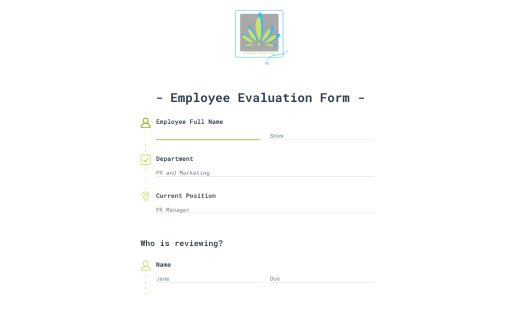
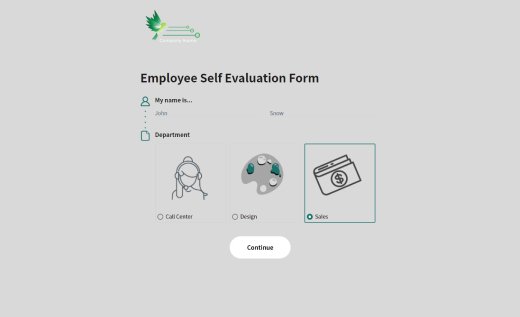
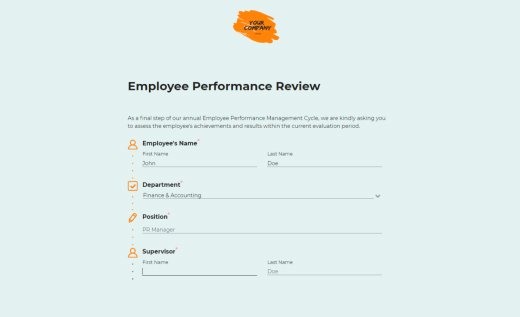
Employee Evaluation
Assess employee performance, skills, and professional development across roles and teams.
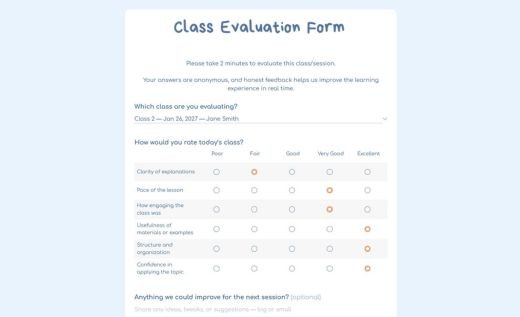
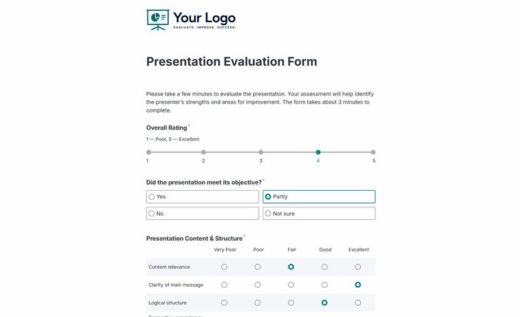
Training & Education Evaluation
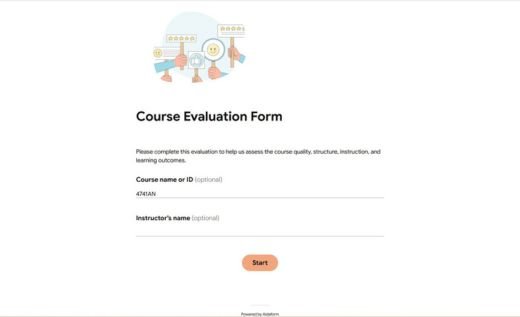
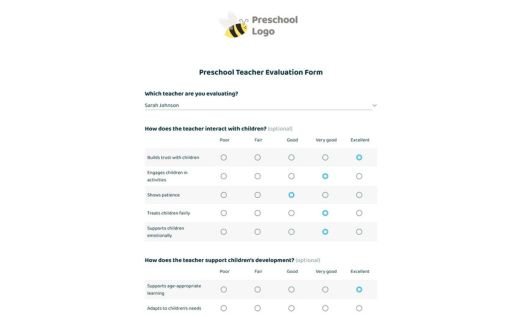
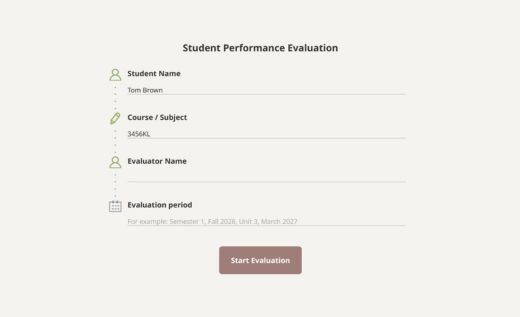
Evaluate training sessions, courses, workshops, and learning outcomes, as well as student and teacher performance.
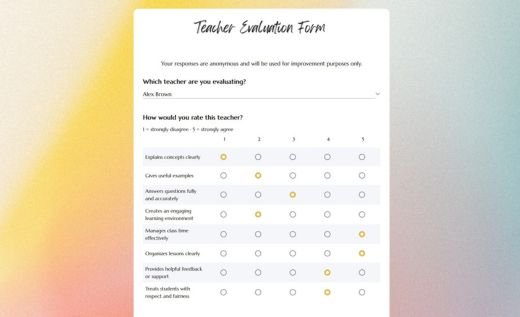
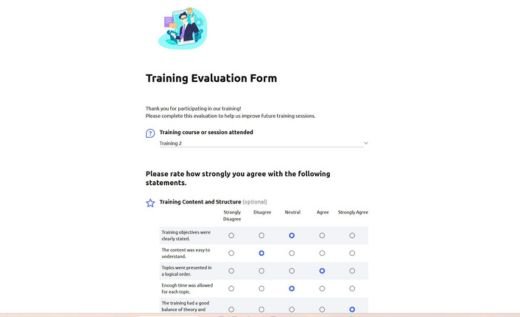
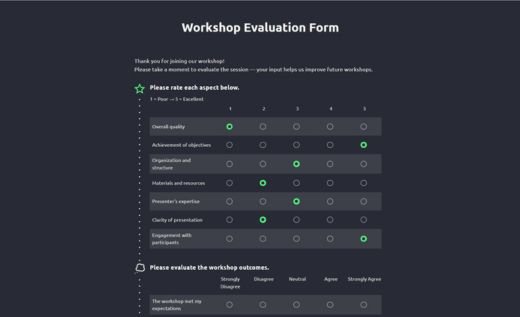
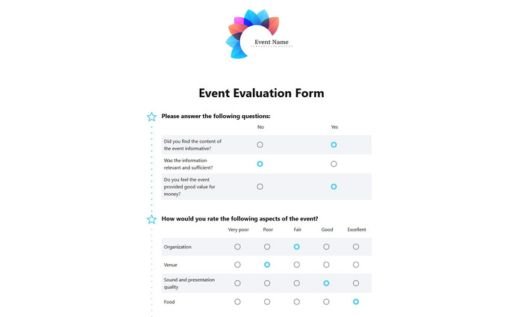
Event Evaluation
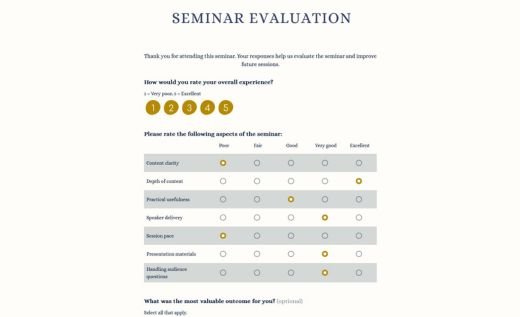
Measure event success, session quality, and attendee experience.
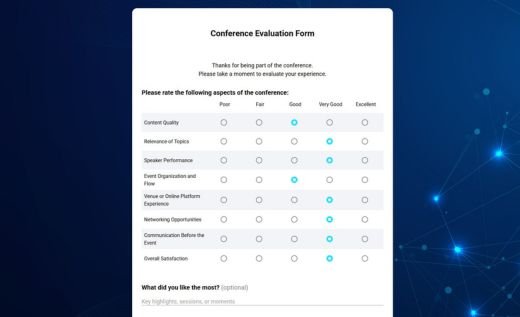
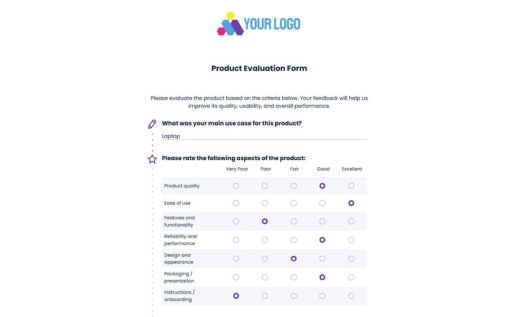
Product Evaluation
Assess product usability, features, and overall user experience.
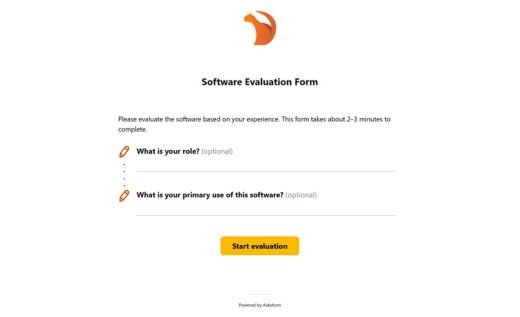
What is an evaluation form and how to use it
An evaluation form is a structured questionnaire used to assess performance, quality, or outcomes based on defined criteria. It helps collect consistent, measurable feedback that can be compared across individuals, sessions, or products. Evaluation forms are most useful when results need to be standardized and easy to track over time.
Use cases
Evaluation forms are widely used across different scenarios where structured assessment is needed:
- employee performance reviews
- training and course assessments
- event evaluations
- product or service analysis
- sports and player performance evaluation
What to include in an evaluation form
A well-designed evaluation form combines clear structure with simple, focused questions:
- evaluation criteria
- rating scales or matrix questions for scoring
- one or two optional comment fields
- logical sections to group related questions
Combining structured scoring with optional open feedback allows you to collect both quantitative data and contextual insights.
Evaluation forms vs feedback forms
Evaluation forms focus on structured criteria and scoring, making results easier to compare and analyze.
Feedback forms are typically more open-ended and used to collect opinions, suggestions, and experiences.
👉 If you want to focus on open-ended input and suggestions, explore feedback form templates.
How to customize and launch AidaForm’s evaluation form templates
Add the template to your account.
Choose a form sample that fits your needs and click the Use Template button to add it to your account. If you’re new to AidaForm, you’ll go through a quick account setup and email confirmation. After logging in, the template will be ready in your account for editing.
Customize your form.
Open the Builder and adjust the questionnaire to match your goals. Add or remove fields, edit texts, or rearrange sections as needed. Common evaluation fields like Matrix and Scale are available in the Form Elements → Survey menu on the left.
Update branding, including colors, fonts, and icons, in the Form Designer on the right. To preview and test the form from a respondent’s perspective, use the Preview button.
Publish and share.
When your form is ready, go to the Publish tab and switch the Form Status to ON. Share the direct link or embed the form on your website using the provided embed code.
AidaForm features for effective evaluations
Conversational and classic form layouts
Choose between a chat-like flow for higher engagement or a classic layout for structured, formal evaluations. Use multi-page forms to group questions into sections with clear subheaders, making longer evaluations easier to navigate and complete.
Matrix questions and rating scales
Run consistent evaluations using rating scales or matrix questions to assess multiple criteria at once. This helps standardize responses, support quantitative analysis, and compare results across participants.
Unlimited forms and fields — even on the free plan
Create as many evaluation forms as needed with no limits on the number of questions or sections. Use essential evaluation fields like scales and matrices for free. Run multiple evaluations in parallel and adapt forms as your needs grow. Upgrade anytime for higher response volumes — plans with 1,000 responses per month start at just $12/month.
Additional video, audio, and text feedback in the same form
Collect richer insights with optional comments, video, or audio responses alongside structured ratings. This helps explain the reasoning behind scores and uncover details that numbers alone may miss.
Branded design and custom domains
Publish forms on your own domain and customize the design to match your brand. A consistent, professional appearance increases trust and improves response rates and quality.
Data export in CSV, XLS, and PDF formats
Export evaluation results for further analysis or reporting. Download responses in CSV, XLS, or PDF formats to share insights, create reports, or work with your data in external tools.
Integrations with Google Sheets and Zapier
Automatically send responses to Google Sheets or connect AidaForm with other tools using Zapier. Streamline your workflows and keep evaluation data in sync across your systems.
Run evaluations like a pro: practical best practices
☑ 1. Define clear evaluation criteria
Start with specific, measurable criteria aligned with your goals. Each question should reflect what you want to assess and how results will be compared.
☑ 2. Use structured scoring for key questions
Apply rating scales or matrix questions to evaluate multiple aspects consistently. Use the same scale across similar questions to ensure results can be analyzed, compared, and tracked over time.
☑ 3. Combine scores with supporting feedback
Add optional comment fields to capture explanations behind ratings. Place them after key questions or at the end of sections. Qualitative input helps interpret scores and reveals insights that numbers alone may miss.
☑ 4. Keep the evaluation short and easy to complete
Avoid unnecessary questions and group related items into sections. Start with simple questions, move to more detailed evaluation criteria, and finish with optional feedback. This flow reduces cognitive load and helps respondents stay engaged throughout the form.